
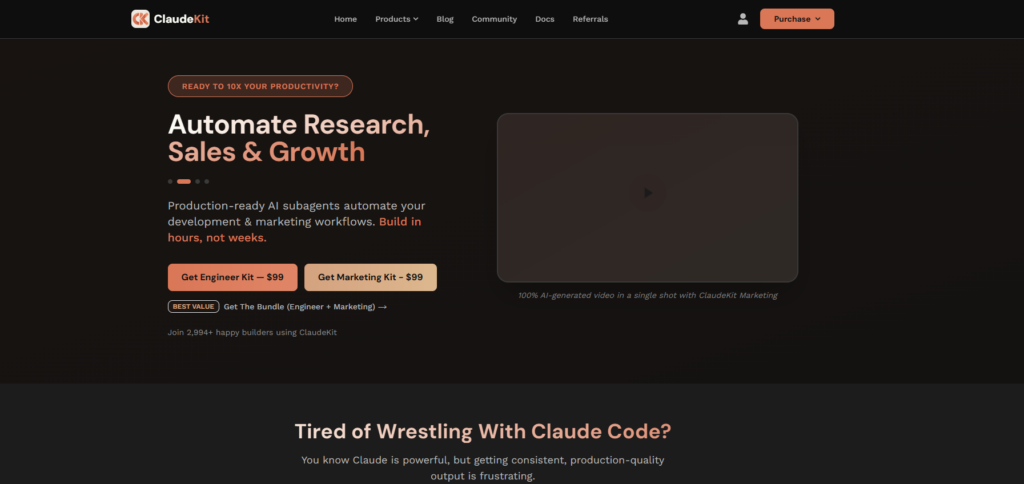
Duy Nguyen – ClaudeKit: A Complete In-Depth Guide to the Creator, Concept, and Value
Introduction
The rapid growth of artificial intelligence has led to a new generation of tools that enhance productivity, creativity, and automation. Among these innovations, curated AI frameworks and prompt systems have gained massive popularity for their ability to simplify complex workflows. One such emerging name is Duy Nguyen – ClaudeKit, which has attracted attention for its structured approach to leveraging advanced AI models efficiently.
This guide provides a comprehensive breakdown of the concept, the creator’s vision, practical applications, benefits, limitations, and who can truly gain value from it. If you are exploring AI toolkits designed for real-world usage rather than experimentation, this article will give you complete clarity.
Who Is Duy Nguyen?
Duy Nguyen is known for his work in building practical systems around modern AI models. Instead of focusing purely on theory, his approach emphasizes usability, structure, and real productivity gains.
His background reflects a deep understanding of:
AI prompt engineering
Workflow optimization
Automation systems
Practical deployment of large language models
Rather than overwhelming users with technical complexity, his work focuses on ready-to-use frameworks that can be implemented immediately by professionals, creators, and businesses.
What Is ClaudeKit?
ClaudeKit is a structured AI toolkit designed to help users get the most out of advanced conversational AI models—particularly those known for reasoning, long-form output, and contextual accuracy.
At its core, the system acts as:
A prompt framework
A workflow accelerator
A productivity enhancement kit
Instead of users starting from scratch, ClaudeKit provides pre-designed structures that guide AI behavior toward consistent, high-quality results.
The Philosophy Behind the Kit
The core philosophy is simple:
AI should adapt to human workflows—not the other way around.
Many AI users struggle because:
Prompts are inconsistent
Outputs vary in quality
Context is lost between tasks
This kit solves those problems by introducing repeatable systems, ensuring predictable performance across different use cases.
Key Features and Capabilities
1. Structured Prompt Architecture
The kit uses carefully designed prompt layers that define:
Role clarity
Task boundaries
Output expectations
This prevents vague or unfocused responses and improves consistency.
2. Workflow-Based Design
Instead of single prompts, ClaudeKit is organized around end-to-end workflows, such as:
Content creation
Research analysis
Business planning
Educational material generation
3. Context Retention Techniques
One of the biggest advantages is its ability to maintain context across longer interactions, making it ideal for complex projects.
4. Customizable Frameworks
Users can modify structures based on:
Industry
Skill level
Output tone
Complexity requirements
Practical Use Cases
Content Creators
Writers, bloggers, and marketers can use the system to:
Generate long-form articles
Create structured outlines
Improve narrative flow
Maintain consistent tone
Entrepreneurs and Businesses
For business users, ClaudeKit supports:
Market research summaries
Business strategy drafts
Email frameworks
SOP creation
Developers and Technical Users
Although not code-heavy, the framework helps with:
Technical documentation
System explanations
Product requirement drafts
Educators and Students
The structured approach is especially useful for:
Study guides
Concept explanations
Assignment drafting
Presentation content
Why Structured AI Toolkits Matter
Unstructured AI usage often leads to:
Repetitive corrections
Wasted time
Inconsistent results
A toolkit like this introduces:
Efficiency
Predictability
Scalability
Instead of reinventing prompts every time, users rely on proven systems that deliver results faster and with less effort.
Strengths of ClaudeKit
Reduces learning curve for AI usage
Saves significant time
Improves output quality
Suitable for beginners and advanced users
Works across multiple industries
The biggest strength lies in its practical orientation, making AI feel like a tool rather than an experiment.
Limitations to Consider
No system is perfect, and users should be aware of:
Initial time required to understand the framework
Best results require slight customization
Not a replacement for human judgment
However, these limitations are minimal compared to the overall benefits.
How It Compares to Generic Prompt Lists
Generic prompts:
Lack structure
Produce inconsistent results
Are difficult to scale
ClaudeKit:
Focuses on systems, not isolated prompts
Maintains consistency
Is designed for repeat use
This makes it more suitable for professionals who value reliability.
Who Should Use This Kit?
This system is ideal for:
Freelancers
Digital marketers
Bloggers
Startup founders
Consultants
Educators
If your work involves thinking, writing, planning, or analyzing, this toolkit can significantly enhance productivity.
Long-Term Value
Unlike trends that fade quickly, structured AI systems offer long-term utility. As AI models evolve, the framework can adapt without losing relevance. This ensures continued value rather than short-term novelty.
Final Thoughts
Duy Nguyen – ClaudeKit represents a shift toward intentional AI usage. Instead of relying on trial and error, users gain access to a structured approach that prioritizes clarity, efficiency, and results.
For anyone serious about integrating AI into daily workflows, this system stands out as a practical, well-designed solution that bridges the gap between powerful models and real-world productivity.





Reviews
There are no reviews yet.