
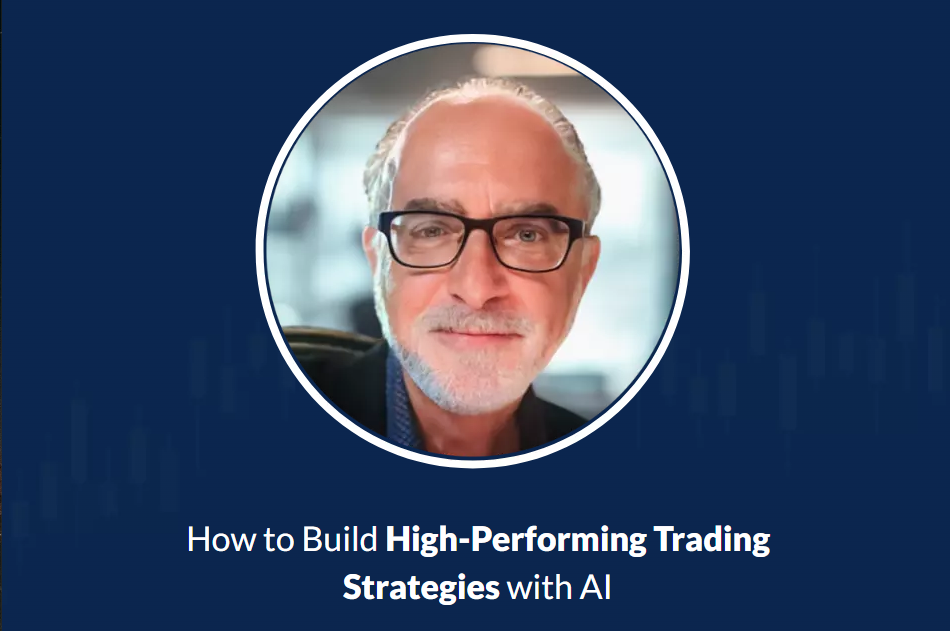
Larry Connors – How To Build High-Performing Trading Strategies With AI
In today’s fast-evolving financial markets, traders are no longer relying solely on intuition, traditional indicators, or basic backtesting tools. The integration of artificial intelligence into systematic trading has changed the landscape completely. Larry Connors – How To Build High-Performing Trading Strategies With AI is designed to bridge the gap between classic quantitative principles and modern machine learning techniques, offering traders a structured path toward building robust, data-driven systems.
This program focuses on practical implementation, combining decades of quantitative trading expertise with the computational power of AI. Whether you are a swing trader, short-term mean reversion specialist, or systematic portfolio manager, the framework introduced here provides tools to enhance precision, reduce emotional bias, and scale strategies effectively.
Who Is Larry Connors?
Larry Connors is a well-known quantitative trader, author, and founder of Connors Research. Over the years, he has authored several influential trading books and research papers that focus on mean reversion, short-term trading systems, and statistical edge.
His research-driven approach emphasizes:
Data-backed decision making
Statistical validation
Risk-adjusted performance optimization
Repeatable systematic strategies
By combining his quantitative expertise with artificial intelligence, he takes systematic trading to a more advanced and adaptive level.
Why AI Is Transforming Trading Strategies
Artificial Intelligence in trading is not just about automation. It’s about pattern recognition at scale, adaptability, and predictive modeling beyond traditional rule-based systems.
Key Advantages of AI in Trading:
Massive Data Processing – AI can analyze millions of data points in seconds.
Pattern Detection – Identifies non-linear relationships humans often miss.
Adaptive Learning – Strategies evolve as market conditions change.
Reduced Emotional Bias – Decisions are rule-based and statistically validated.
Portfolio Optimization – AI can dynamically rebalance risk exposure.
Traditional strategies rely on fixed rules. AI-powered systems learn from data, refine probabilities, and optimize parameters continuously.
Core Concepts Covered in the Program
1. Building a Strong Quantitative Foundation
Before integrating machine learning, a trader must understand:
Market microstructure
Statistical edge
Mean reversion vs momentum models
Risk-to-reward ratios
Drawdown control
The course emphasizes that AI should enhance solid strategies—not replace foundational logic.
2. Data Collection and Cleaning
High-performing systems begin with high-quality data. Key topics include:
Historical price data structuring
Volume and volatility metrics
Handling missing data
Avoiding survivorship bias
Eliminating look-ahead bias
AI models are only as good as the data they train on. Clean datasets improve predictive stability and prevent overfitting.
3. Strategy Development Framework
The program outlines a structured workflow:
Idea Generation
Hypothesis Testing
Backtesting
Walk-Forward Analysis
AI Optimization
Risk Calibration
Live Deployment
This systematic approach ensures traders avoid random experimentation and instead build scalable, performance-driven models.
4. Machine Learning Integration
Artificial intelligence techniques covered typically include:
Regression models
Classification algorithms
Neural networks
Decision trees
Random forests
Reinforcement learning basics
Instead of blindly applying algorithms, the focus is on selecting the right model for the right market condition.
How AI Enhances Mean Reversion Systems
Mean reversion has long been a core strategy style for short-term traders. AI improves it by:
Identifying optimal entry thresholds
Adjusting holding periods dynamically
Filtering false signals
Improving win-rate consistency
Optimizing position sizing
By analyzing volatility clusters and historical probability distributions, AI enhances timing precision significantly.
Risk Management: The Real Edge
No strategy survives without disciplined risk management. The program emphasizes:
Maximum drawdown controls
Volatility-based position sizing
Portfolio heat limits
Correlation control
Adaptive stop-loss systems
AI models can simulate thousands of market scenarios, helping traders understand risk exposure before real capital is deployed.
Avoiding Overfitting in AI-Based Strategies
One of the biggest dangers in algorithmic trading is curve fitting. The course addresses:
Out-of-sample testing
Walk-forward validation
Cross-validation techniques
Monte Carlo simulations
Parameter robustness testing
The goal is to build strategies that perform consistently in unseen market conditions.
Portfolio Construction With AI
Beyond individual strategies, AI can help construct diversified portfolios by:
Measuring correlation between systems
Allocating capital dynamically
Reducing overall volatility
Enhancing risk-adjusted returns
Instead of focusing on one strategy, traders learn how to combine multiple models into a cohesive portfolio.
Practical Implementation Steps
The course provides a hands-on roadmap:
Step 1: Identify Market Inefficiency
Search for recurring behavioral or structural patterns.
Step 2: Define Rules Clearly
Create measurable and testable entry and exit criteria.
Step 3: Backtest Properly
Use large datasets with realistic transaction costs.
Step 4: Apply AI Optimization
Fine-tune parameters using machine learning validation techniques.
Step 5: Stress Test
Simulate adverse market conditions.
Step 6: Deploy Gradually
Start with small capital allocation before scaling.
Who Should Take This Program?
This course is ideal for:
Systematic traders
Algorithmic traders
Quantitative researchers
Swing traders
Data-driven investors
Financial engineers
Beginners with strong motivation can also benefit, provided they are willing to learn basic statistics and trading fundamentals.
Expected Outcomes
After completing the program, traders should be able to:
Develop statistically sound strategies
Integrate AI into trading workflows
Validate systems with professional testing methods
Manage risk systematically
Build diversified algorithmic portfolios
Reduce emotional trading decisions
The biggest takeaway is not just strategy building—but developing a professional, repeatable process.
Key Benefits
Data-backed strategy development
Practical AI integration
Risk-first trading philosophy
Robust backtesting methods
Institutional-level validation techniques
Scalable portfolio construction
Long-Term Value of AI-Driven Systems
Markets evolve. What worked five years ago may not work today. AI-driven strategies adapt to new data, changing volatility regimes, and macroeconomic shifts. This makes them more resilient than static trading rules.
By combining quantitative discipline with machine intelligence, traders create systems capable of surviving different market cycles—bullish expansions, bearish downturns, and sideways consolidations.
Final Thoughts
Larry Connors – How To Build High-Performing Trading Strategies With AI represents a modern evolution of systematic trading. It blends decades of quantitative research with cutting-edge artificial intelligence techniques, providing traders with a structured and scalable roadmap.
Instead of relying on guesswork, traders learn to build statistically validated systems, test them rigorously, and deploy them responsibly. The emphasis on risk management, data integrity, and adaptability makes this program highly valuable for anyone serious about algorithmic trading.
In a competitive financial environment, the traders who succeed are those who combine research, discipline, and technology. This course equips them with exactly that.





Reviews
There are no reviews yet.