
Paul Ekman – Emotions Revealed Recognizing Faces and Feelings
Understanding human emotions is one of the most powerful skills in communication, psychology, relationships, and even business. In a world where interactions are becoming increasingly fast-paced and digital, the ability to accurately interpret someone’s emotional state has become more valuable than ever. The insights from Paul Ekman – Emotions Revealed Recognizing Faces and Feelings serve as a foundation for learning how emotions show up on the human face, why they appear the way they do, and how they influence our decisions, reactions, and connections.
This guide explores facial expressions, micro-expressions, behavioral cues, and the science of emotional intelligence based on Ekman’s decades-long research. It is crafted for people who want to improve their communication skills, decode hidden emotions, strengthen relationships, or simply understand human behavior on a deeper level.
The Science Behind Emotions and Facial Expressions
Emotions are universal. No matter where you go—India, Japan, Brazil, Africa, Europe—humans share the same set of basic emotional expressions. Happiness looks similar across cultures. Anger feels the same. Fear, disgust, surprise, sadness, and contempt all have recognizable facial cues that we instinctively understand.
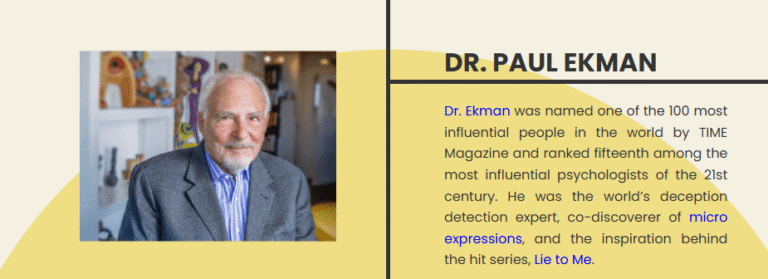
Paul Ekman spent years traveling the world studying isolated tribes to test whether facial expressions were learned or biological. His research confirmed that emotional expressions are innate, not cultural. This discovery changed everything in modern psychology.
Why Emotions Are Universal
Humans evolved with a built-in emotional system. This system helps us react quickly to threats, opportunities, and social interactions. For example:
Fear widens the eyes to improve sight.
Anger narrows the eyebrows to focus attention.
Disgust wrinkles the nose to block harmful smells.
Happiness relaxes the face and signals safety.
Our faces evolved to communicate emotions instantly, even without words.
Understanding Micro-Expressions
Micro-expressions are tiny, involuntary facial movements that last less than a second. They reveal a person’s true feelings even when they are trying to hide them.
Why Micro-Expressions Matter
Most people attempt to mask emotions during:
arguments
negotiations
interviews
sales conversations
romantic situations
high-pressure moments
But the face leaks information. Micro-expressions give a glimpse of what someone is experiencing internally.
The Seven Universal Micro-Expressions
Based on Ekman’s research, the seven main emotions appear in short bursts:
Happiness – eyes crinkle, smile reaches the eyes
Sadness – inner eyebrows lift, lips turn down
Anger – brows pulled together, lips pressed
Fear – eyes wide, eyebrows raised, jaw drops
Disgust – nose wrinkles, upper lip raises
Surprise – eyes wide, eyebrows lift, mouth opens
Contempt – one corner of the mouth lifts
These expressions happen too quickly for conscious control.
Emotional Triggers and Human Behavior
Every emotion has a trigger. Understanding these triggers helps us predict behavior.
How Emotional Triggers Work
A trigger can be:
a memory
a situation
a tone of voice
a facial expression
a relationship dynamic
a past trauma
The body responds before the mind has time to think. This is why emotions often feel automatic.
Emotions Influence Decisions
Studies show that most decisions are emotional first and rational second. Whether choosing a product, partner, career, or lifestyle, emotions act as the silent driver.
Companies, politicians, influencers, and leaders understand this deeply. They use emotional cues in storytelling, branding, and communication to connect with audiences.
The Role of Emotional Intelligence in Daily Life
Emotional intelligence (EQ) determines how well we understand, manage, and respond to emotions.
Components of Emotional Intelligence
EQ includes:
Self-awareness
Self-regulation
Empathy
Social skills
Motivation
These skills directly affect communication, leadership, relationships, and personal growth.
Benefits of High Emotional Intelligence
People with strong EQ:
build better relationships
reduce conflict
communicate clearly
understand others’ emotions
handle stress more effectively
create meaningful connections
influence and inspire others
In workplaces, high-EQ individuals often become top performers and leaders.
Reading Facial Expressions Accurately
Most people misread facial expressions because of assumptions, biases, or lack of observation. Ekman’s system helps improve accuracy.
Steps to Read Emotions Correctly
1. Observe the Entire Face
Focus on:
eyebrows
eyes
mouth
forehead
cheeks
Each emotion activates a unique combination of muscles.
2. Look for Sudden Changes
Emotions usually appear and disappear quickly.
3. Notice Inconsistencies
If the face shows one emotion but the voice shows another, something is being hidden.
4. Pay Attention to the Eyes
The eyes rarely lie. They reveal:
fear
sadness
excitement
stress
deception
5. Don’t Jump to Conclusions
Context matters. One expression does not equal truth. Patterns reveal real emotions.
Improving Communication Through Emotional Awareness
Communication becomes more effective when we understand emotional signals.
How Emotional Awareness Helps
Reduces misunderstandings
Strengthens trust
Helps resolve conflicts
Creates deeper conversations
Improves personal and romantic relationships
Enhances leadership and teamwork
When you can recognize emotions, you respond more intelligently.
Using Facial Cues in Relationships
Relationships—romantic or otherwise—are built on emotional connection. Understanding emotional cues helps partners feel seen and understood.
Signals That Improve Relationships
noticing sadness early prevents arguments
recognizing frustration encourages empathy
identifying stress avoids miscommunication
noticing happiness deepens bonding
People feel valued when someone understands their emotional state without them needing to explain it.
Emotional Mastery for Personal Growth
Emotional mastery doesn’t mean suppressing emotions—it means understanding them and responding wisely.
How to Develop Emotional Mastery
Recognize your emotional patterns
Practice self-awareness daily
Reflect on emotional triggers
Improve your listening skills
Learn to pause before reacting
This transforms communication, decision-making, and overall confidence.
Role of Emotional Understanding in Professional Success
In business, the ability to read emotions is a superpower.
How Businesses Use Emotional Insights
HR uses them to understand candidates
marketers use them to attract customers
salespeople use them to close deals
leaders use them to unify teams
negotiators use them to identify leverage
Understanding emotions enhances influence and persuasion.
Training Yourself to Recognize Emotions
Anyone can learn emotional recognition with practice.
Steps to Improve
study facial muscle movement
practice identifying expressions in real time
watch interviews without sound
observe reactions during conversations
journal emotional responses
increase empathy by understanding perspectives
Consistent practice builds strong emotional skills.
Why Understanding Emotions Matters Today
The world is shifting. Artificial intelligence, digital communication, and fast-paced lifestyles reduce face-to-face emotional interaction. People are losing the ability to read emotions naturally.
Learning emotional recognition makes you:
more confident
more empathetic
more persuasive
more resilient
more socially aware
It helps you understand the hidden language behind every face.
Conclusion
Human emotions form the foundation of communication, relationships, behavior, and decision-making. Understanding them brings clarity to interactions and helps us connect more meaningfully with others. By learning how facial expressions work, recognizing micro-expressions, and improving emotional intelligence, anyone can strengthen their personal and professional life.
The research behind facial cues and emotional behavior has given humanity a blueprint for decoding feelings accurately. With consistent practice, you can master emotional recognition and use it to navigate any situation with greater confidence and awareness.





Reviews
There are no reviews yet.