
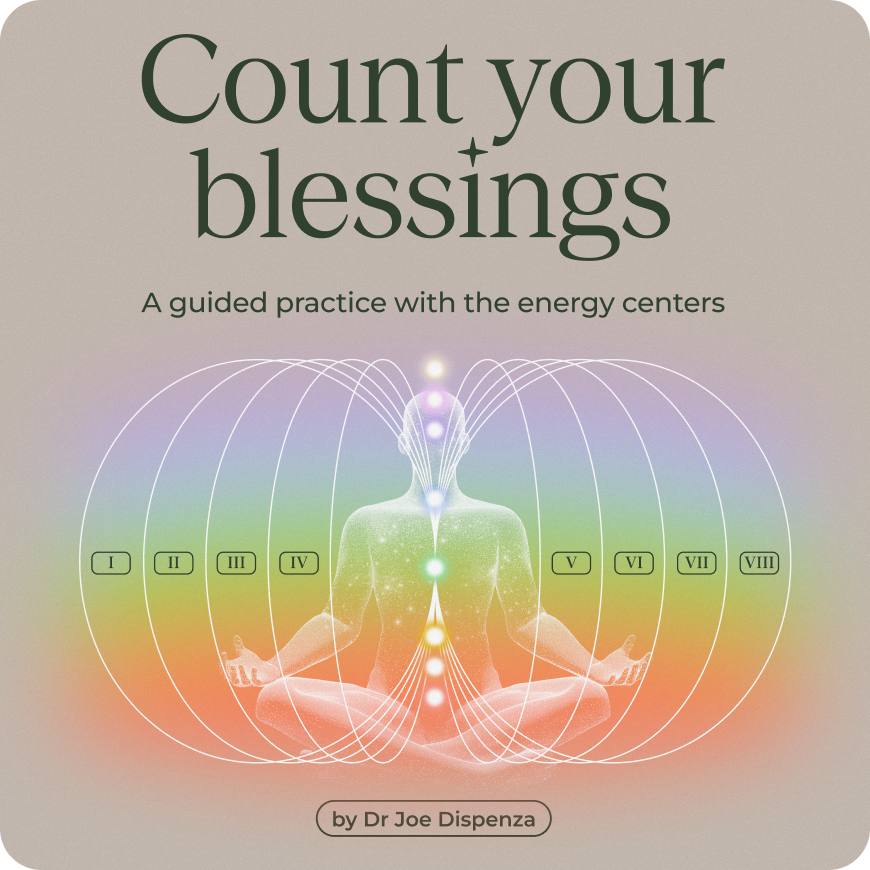
Dr. Joe Dispenza – Count Your Blessings
Gratitude is often described as a simple emotion, but modern neuroscience and personal transformation research suggest it is far more powerful. When practiced consistently, gratitude can reshape perception, influence emotional balance, and support long-term personal change. Dr. Joe Dispenza – Count Your Blessings represents a philosophy rooted in awareness, intention, and conscious living, where appreciation becomes a tool for inner growth rather than a passive feeling.
This in-depth guide explores the deeper meaning behind counting blessings, how gratitude affects the brain and body, and how this practice fits into a practical daily routine for long-lasting transformation.
Who Is Dr. Joe Dispenza?
Dr. Joe Dispenza is known for blending neuroscience, epigenetics, quantum physics, and meditation into a practical framework for personal development. His teachings focus on how thoughts, emotions, and repeated mental states influence behavior, health, and life outcomes.
At the heart of his philosophy lies one consistent principle: what you repeatedly focus on and emotionally experience shapes your reality. Gratitude plays a critical role in this process because it naturally elevates emotional states and reinforces positive mental conditioning.
The Deeper Meaning of Counting Blessings
Counting blessings goes beyond listing things you are thankful for. It is a mental and emotional reorientation, shifting attention away from lack, stress, and fear toward abundance and possibility.
This practice involves:
Becoming consciously aware of positive aspects of life
Feeling genuine appreciation rather than forced positivity
Training the mind to recognize value in the present moment
Over time, this mental habit builds emotional resilience and clarity.
The Neuroscience Behind Gratitude
From a scientific perspective, gratitude influences several key systems in the brain:
1. Neuroplasticity
Repeated grateful thoughts strengthen neural pathways associated with optimism, emotional regulation, and focus. The brain adapts to what it experiences most often.
2. Stress Reduction
Gratitude lowers activity in stress-related brain regions and supports parasympathetic nervous system activation, which promotes calmness and recovery.
3. Emotional Regulation
Positive emotional states improve impulse control and decision-making by balancing the limbic system and prefrontal cortex.
Through repetition, gratitude becomes an automatic mental response rather than a conscious effort.
Gratitude as an Emotional Signal
According to Dispenza’s teachings, emotions act as signals to the body and subconscious mind. Gratitude sends a powerful message of safety, fulfillment, and confidence.
When gratitude is felt deeply:
The body shifts out of survival mode
Hormonal balance improves
The mind becomes more receptive to new possibilities
This is why gratitude is often practiced before visualization or meditation—it prepares the internal environment for change.
Emotional Conditioning and Daily Habits
Counting blessings works best when practiced consistently. Emotional conditioning happens through repetition, not intensity.
Simple daily habits include:
Reflecting on meaningful moments
Appreciating progress rather than perfection
Acknowledging personal growth
Recognizing supportive relationships
These practices train emotional memory, making positive states more accessible over time.
Gratitude and the Present Moment
One of the most transformative aspects of gratitude is how it anchors awareness in the present. Stress often comes from dwelling on the past or worrying about the future. Gratitude dissolves this pattern by focusing attention on what already exists.
Being present allows:
Reduced mental noise
Improved clarity
Deeper emotional stability
This presence forms the foundation of mindful living.
Integrating Gratitude Into Meditation
Many of Dispenza’s meditation principles begin with gratitude because it elevates emotional frequency quickly. Gratitude helps bypass analytical thinking and access deeper subconscious states.
A basic approach includes:
Sitting quietly with controlled breathing
Bringing attention to positive life experiences
Allowing appreciation to be fully felt in the body
Holding that emotional state steadily
This practice strengthens coherence between mind and body.
Gratitude and Identity Transformation
Personal change requires more than new goals—it requires a shift in identity. Gratitude supports this shift by reinforcing a self-image rooted in abundance rather than limitation.
When practiced daily, gratitude:
Changes how challenges are perceived
Encourages responsibility instead of blame
Builds emotional maturity
Supports confidence and self-trust
Over time, this leads to consistent behavioral change.
Emotional Energy and Life Alignment
Dispenza emphasizes that emotional states influence the outcomes we experience. Gratitude aligns emotional energy with constructive action.
People who cultivate gratitude often notice:
Improved relationships
Clearer decision-making
Higher motivation
Reduced emotional reactivity
This alignment allows actions to flow naturally instead of feeling forced.
Common Mistakes in Gratitude Practice
Many people struggle with gratitude because of unrealistic expectations. Common mistakes include:
Treating gratitude as a checklist
Forcing positive emotions
Ignoring negative feelings instead of understanding them
Practicing inconsistently
Authentic gratitude arises from awareness, not obligation.
Gratitude During Difficult Times
One of the most powerful aspects of counting blessings is its effectiveness during adversity. Gratitude does not deny difficulty—it reframes perspective.
During challenges, gratitude helps by:
Reducing emotional overwhelm
Encouraging problem-solving
Maintaining mental balance
Preserving long-term vision
This balanced approach strengthens emotional intelligence.
Long-Term Benefits of a Gratitude-Centered Life
Over months and years, gratitude becomes a defining trait rather than a practice. Long-term benefits include:
Stronger emotional resilience
Better mental health
Increased self-awareness
Consistent personal growth
Improved physical well-being
These changes compound over time, shaping lifestyle and mindset.
Gratitude as a Daily Mental Discipline
Counting blessings is not about perfection; it is about consistency. Even a few minutes a day can reshape perception and emotional responses.
The key principles include:
Awareness before reaction
Feeling before thinking
Consistency over intensity
Presence over expectation
When practiced with intention, gratitude becomes a lifelong discipline.
Final Thoughts
Dr. Joe Dispenza – Count Your Blessings reflects a powerful approach to inner transformation that blends science, mindfulness, and emotional awareness. Gratitude is not merely a feel-good habit—it is a neurological and emotional training system that shapes identity, perception, and personal evolution.
By consciously cultivating appreciation, individuals can move beyond survival-based thinking and step into a more intentional, balanced, and empowered way of living.





Reviews
There are no reviews yet.