
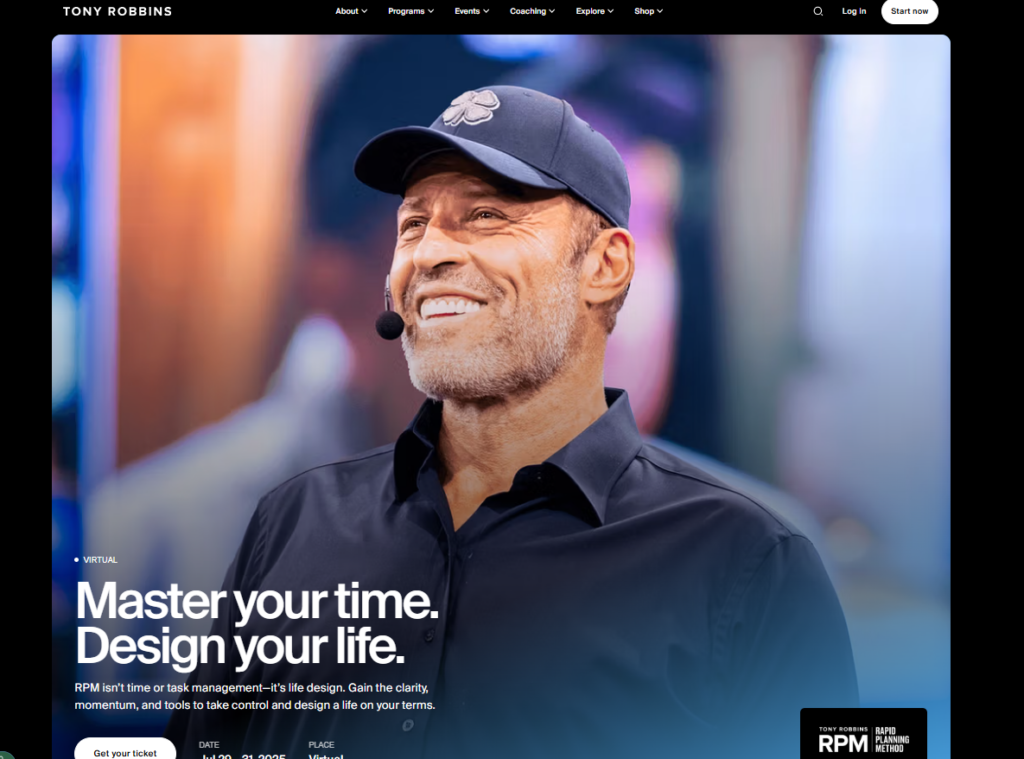
In a world where distractions are constant and goals often remain unfinished, having a proven system for clarity and execution is no longer optional—it’s essential. One of the most powerful and widely respected planning frameworks ever created is the Rapid Planning Method, developed by Tony Robbins.
This guide explores how the RPM framework has evolved for modern challenges, why it remains relevant in 2025, and how you can apply it to achieve extraordinary results in your personal and professional life.
What Is the Rapid Planning Method (RPM)?
The Rapid Planning Method is not a traditional goal-setting system. Unlike to-do lists that focus only on tasks, RPM is designed to align purpose, emotion, and action. It helps individuals move from vague desires to crystal-clear outcomes by focusing on why something matters before determining how to achieve it.
At its core, RPM is about transforming intention into massive action through clarity and emotional leverage.
Why RPM Still Matters in 2025
The modern world has changed dramatically—AI tools, remote work, digital overload, and shorter attention spans dominate daily life. Yet human psychology has remained largely the same. People still struggle with:
Lack of focus
Inconsistent motivation
Overwhelm from endless tasks
Goals without emotional connection
RPM works because it addresses these exact problems. It is not time management—it is life management.
In 2025, RPM has become even more relevant because success now depends on clarity, adaptability, and emotional intelligence, not just hard work.
The Core Philosophy Behind RPM
Traditional planning asks:
“What do I need to do?”
RPM asks:
“What do I truly want, and who must I become to achieve it?”
This shift changes everything.
The method operates on three psychological pillars:
Outcome-based thinking
Emotional drivers
Identity-level change
When these three align, procrastination fades and execution becomes natural.
The 3 Pillars of Rapid Planning Method Explained
1. Results (What Do You Really Want?)
The first step is defining a specific, compelling result. Not a vague wish, but a clearly defined outcome.
Instead of:
“I want to be successful”
You define:
“I want to build a scalable online business generating consistent monthly revenue”
Clarity eliminates confusion and provides direction.
2. Purpose (Why Must You Achieve This?)
This is the most powerful part of RPM.
Purpose answers the emotional question:
Why does this matter deeply to me?
Strong reasons create unstoppable momentum. When your goal is connected to identity, freedom, family, contribution, or growth, motivation becomes internal rather than forced.
Without emotional leverage, even the best plans fail.
3. Massive Action Plan (How Will You Achieve It?)
Only after clarity and purpose are established does RPM move into strategy.
Here, you create a flexible action map, not a rigid checklist. The focus is on:
High-impact actions
Leverage points
Continuous adjustment
RPM encourages progress over perfection.
RPM vs Traditional Goal-Setting Systems
| Traditional Planning | Rapid Planning Method |
|---|---|
| Task-focused | Outcome-focused |
| Logic-driven | Emotion-driven |
| Short-term motivation | Long-term drive |
| External pressure | Internal purpose |
| Rigid plans | Flexible execution |
This is why RPM consistently outperforms conventional productivity systems.
How RPM Has Evolved for the Modern Era
In recent years, the framework has adapted to suit digital entrepreneurs, creators, professionals, and leaders. The modern version emphasizes:
Mental clarity over hustle
Leverage through systems and automation
Focus on fewer, high-impact goals
Alignment between personal values and professional growth
The updated approach fits seamlessly into today’s fast-moving, tech-driven world.
Applying RPM in Real Life (Practical Examples)
Career & Business Growth
RPM helps professionals design careers intentionally rather than reactively. Instead of chasing promotions blindly, individuals define outcomes aligned with lifestyle, income, and purpose.
Health & Fitness
Rather than focusing on workouts alone, RPM connects health goals to identity, confidence, longevity, and energy—making consistency easier.
Relationships
By clarifying desired emotional states and experiences, RPM improves communication, boundaries, and connection.
Personal Development
Learning becomes goal-oriented and purposeful instead of scattered and overwhelming.
Common Mistakes People Make with RPM
Even powerful systems fail when misused. Common errors include:
Treating RPM like a to-do list
Skipping the emotional “why”
Setting too many outcomes at once
Focusing on perfection instead of progress
RPM works best when applied to fewer priorities with deeper commitment.
The Psychology Behind RPM’s Effectiveness
RPM leverages key principles of human behavior:
Neuro-associative conditioning – linking emotion to action
Identity reinforcement – becoming the person who achieves the goal
Clarity bias – the brain performs better with clear targets
These principles explain why RPM feels natural rather than forced.
Who Should Use RPM?
This system is ideal for:
Entrepreneurs and business owners
Content creators and digital professionals
Students aiming for clarity and direction
Executives and leaders
Anyone tired of setting goals without results
If you value results with meaning, RPM is a perfect fit.
Final Thoughts
Success in 2025 is no longer about doing more—it’s about doing what truly matters with clarity and purpose. The Tony Robbins – Rapid Planning Method (RPM) 2025 framework stands out because it aligns goals with identity, emotion, and action.
When you know what you want, why it matters, and who you must become, achievement stops being a struggle and starts becoming a natural outcome.




Reviews
There are no reviews yet.