
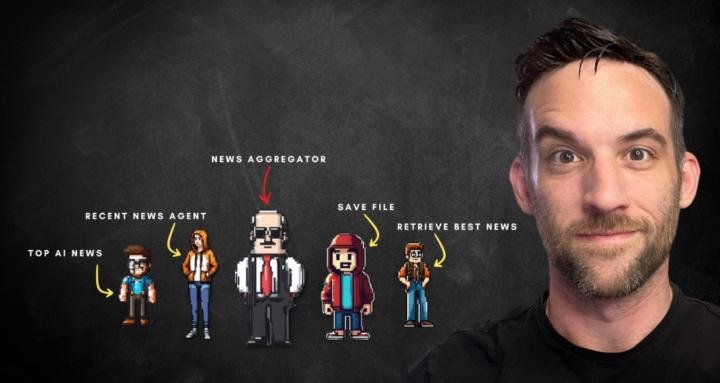
Artificial intelligence has moved beyond simple automation and predictive models into a new phase defined by autonomy, adaptability, and goal-oriented behavior. In this landscape, Tyler Reed – The AI Agent represents a modern framework and philosophy focused on building intelligent systems that can reason, plan, act, and learn with minimal human intervention. Rather than responding to single prompts or executing rigid scripts, this approach emphasizes agents that operate continuously, handle uncertainty, and improve over time.
This guide is designed as a complete, in-depth resource for anyone seeking to understand how AI agents work, how they are built, and why they matter across industries. Whether you’re a business owner, developer, marketer, or AI enthusiast, this content provides a structured, practical, and future-focused explanation.
What Is an AI Agent?
An AI agent is a software entity capable of perceiving its environment, making decisions, and taking actions to achieve specific objectives. Unlike traditional programs that follow predefined instructions, agents evaluate situations dynamically and choose the best possible action based on goals, context, and feedback.
Key characteristics include:
Autonomy: Operates without constant human input
Perception: Collects data from APIs, databases, or real-time inputs
Decision-making: Uses logic, probability, or learning models
Action: Executes tasks such as sending messages, triggering workflows, or generating content
Learning: Improves behavior using feedback and historical outcomes
This shift transforms AI from a tool you use into a system that works for you.
The Core Philosophy Behind Tyler Reed – The AI Agent
At its foundation, this model is built around practical intelligence rather than abstract theory. The goal is not just to create smart algorithms, but to design agents that deliver measurable results in real-world environments.
Core principles include:
Goal-first design: Every agent starts with a clearly defined objective
Modular architecture: Components can be upgraded or replaced easily
Human-in-the-loop safety: Oversight mechanisms for critical decisions
Scalability: Designed to handle increasing complexity and workloads
Ethical alignment: Focus on transparency, privacy, and responsible use
This philosophy bridges the gap between cutting-edge AI research and everyday business applications.
How AI Agents Actually Work (Step-by-Step)
1. Goal Definition
An agent begins with a goal such as increasing sales conversions, managing customer support, or optimizing logistics. Clear goals guide all future decisions.
2. Environment Perception
The agent gathers data from multiple sources—websites, CRMs, sensors, emails, or user interactions. This data forms the agent’s understanding of its environment.
3. Reasoning and Planning
Using rules, probabilistic models, or large language models, the agent evaluates options and creates a plan. Advanced agents can simulate outcomes before acting.
4. Action Execution
The agent performs tasks: replying to users, updating records, launching campaigns, or coordinating with other agents.
5. Feedback and Learning
Results are analyzed. Successes are reinforced, failures are corrected. Over time, performance improves through continuous learning loops.
Key Technologies Powering Modern AI Agents
Several technologies converge to make intelligent agents possible:
Large Language Models (LLMs): Enable reasoning, summarization, and communication
Reinforcement Learning: Helps agents optimize actions through trial and error
Tool Calling & APIs: Allow agents to interact with external systems
Vector Databases: Store memory and contextual knowledge
Workflow Orchestration: Coordinates multi-step processes reliably
The strength lies not in a single technology, but in how they are combined.
Real-World Use Cases
Business Automation
AI agents can manage email inboxes, schedule meetings, qualify leads, and generate reports—saving hundreds of hours monthly.
Marketing & Sales
Agents analyze customer behavior, personalize campaigns, write ad copy, and optimize funnels in real time.
Customer Support
24/7 intelligent support agents resolve issues, escalate complex cases, and learn from past interactions.
Software Development
Agents assist with code generation, debugging, testing, and documentation, accelerating development cycles.
Research & Analysis
They scan vast datasets, summarize insights, track trends, and produce actionable intelligence faster than human teams.
Benefits of Using AI Agents
Efficiency: Tasks completed faster with fewer resources
Consistency: Decisions are based on data, not fatigue or bias
Scalability: One agent can serve thousands of users simultaneously
Cost Reduction: Lower operational expenses over time
Strategic Focus: Humans concentrate on creativity and leadership
These benefits compound as agents learn and systems mature.
Challenges and Limitations
Despite their power, AI agents are not without challenges:
Data quality dependence: Poor data leads to poor decisions
Over-automation risks: Not every decision should be autonomous
Security concerns: Requires strict access control
Ethical considerations: Transparency and accountability are essential
Successful implementation balances automation with governance.
Best Practices for Implementation
Start with a single, high-impact use case
Define clear success metrics
Maintain human oversight during early stages
Continuously monitor and refine performance
Invest in secure infrastructure and compliance
Following these steps ensures sustainable, responsible deployment.
The Future Vision
AI agents are evolving from task executors into collaborative digital partners. Future systems will coordinate with other agents, negotiate objectives, and adapt across domains. As models become more efficient and aligned, agents will play a central role in how businesses operate and how individuals interact with technology.
The long-term vision behind Tyler Reed – The AI Agent is not replacement, but augmentation—amplifying human capability at scale.
Conclusion
AI agents represent one of the most important shifts in modern technology. By combining autonomy, intelligence, and learning, they redefine productivity and decision-making. This comprehensive framework demonstrates how thoughtfully designed agents can deliver real value while remaining ethical, secure, and scalable.
For anyone serious about leveraging AI beyond basic automation, this approach offers a clear, practical, and future-ready blueprint.





Reviews
There are no reviews yet.